The Age of AI That "Listens While Speaking" | The Challenge of a Former OpenAI CTO
機械翻訳 / Machine-translated
A
AI Friends
2026年5月13日・13分で読める

機械翻訳 / Machine-translated
@aifriends
AI Friends(https://aifriends.jp)のクロスポスト公式アカウント。AIツールの紹介・使い方・できることを、中学生でもわかるやさしい日本語で届けます。
What you'll learn in this article:
On May 12, 2026, an announcement arrived that would bring significant change to the world of AI. "Thinking Machines Lab," founded by Mira Murati — former CTO (Chief Technology Officer) of OpenAI — unveiled a new type of AI called "Interaction Models."
Murati is known as the person who drove the technical development of ChatGPT. Believing that "today's AI dialogue has a fundamental problem," she is now taking on an entirely new approach.
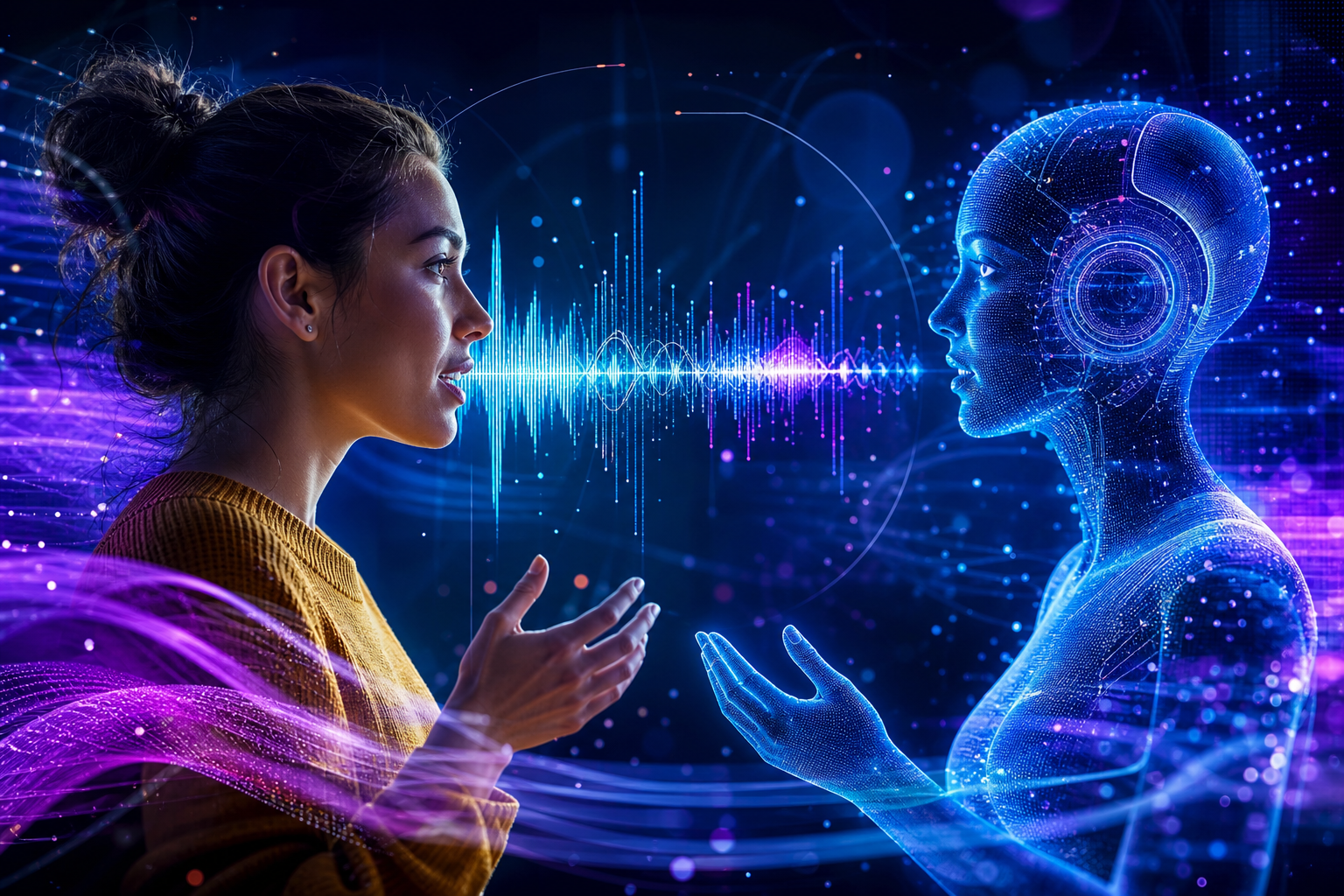
After leaving OpenAI, Murati launched Thinking Machines Lab. The result was "Interaction Models" — capable of processing voice, video, and text in real time. In other words, AI can now "listen while speaking," just like a human.
Current AI systems like ChatGPT and Gemini operate on a "turn-based" model: the AI waits for the human to finish speaking before giving a response, following a strict back-and-forth order.
For example, when you ask ChatGPT a question, you first type out the entire question and hit send. Then you wait until the AI finishes its answer. This sequential flow of "taking turns to speak" is what "turn-based" means.
This approach has a major drawback. In natural conversation between humans, we nod while the other person is talking, or interject with "Oh, right—" before they finish. But conventional AI simply waits in silence until you're done speaking. It can't see your facial expressions or gestures, either.
Murati concluded that true collaborative work isn't possible with an AI that only "waits." She determined that what's needed is an AI that can respond flexibly by reading the other person's cues — just like a human.
Interaction Models adopt a communication method called "full-duplex," which allows sending and receiving to occur simultaneously. Using a phone call as an analogy, it's like being able to speak while still hearing the other person.
Specifically, this AI splits conversation into small 200-millisecond (0.2-second) units for processing. This means that even while you're speaking, the AI checks your voice and video every 0.2 seconds and prepares its response.
The range of what this AI can do is remarkably broad:
If conventional AI was a "robot that answers questions," Interaction Models is closer to a "colleague who thinks alongside you."
The small model released by Thinking Machines Lab — "TML-Interaction-Small" — posted remarkable results in benchmark testing (performance measurement tests). Its response time is an astonishing 0.4 seconds or less.
This significantly surpasses Google's Gemini 3.1 Flash Live (response time: 0.57 seconds) and OpenAI's GPT Realtime 2.0 (response time: 1.18 seconds). Since the "pause" that humans perceive as natural in conversation is said to be within one second, a speed of 0.4 seconds can be described as "nearly the same as a human."
The technology that makes this speed possible is called "encoder-free early fusion." Conventional AI first converts speech into text (encoding) before processing it. Interaction Models, however, integrates voice, video, and text from the very start, eliminating the need for that conversion step.
At present, only the small model has been released publicly. The large model requires enormous computational resources, making it difficult to maintain the speed needed for real-time processing — a challenge that remains to be solved. Thinking Machines Lab plans to release the large model after addressing this issue.
If Interaction Models becomes widespread, Japan's business landscape could change dramatically.
First, online meetings will become remarkably more convenient. Japanese-speaking and English-speaking participants will be able to converse naturally, each in their own language. With AI providing real-time translation in between, there will be no more waiting for an interpreter.
Next, the quality of customer support will improve. Conventional AI chatbots could only respond to text typed by customers. With Interaction Models, however, the AI can read the emotion in a caller's tone of voice and speaking pace, and respond appropriately.
Changes will come to education as well. Watching a student work through a problem, the AI can provide real-time support — "You're on the right track so far," or "Try thinking about it a bit more." Rather than one-way explanations, it creates an environment for learning through dialogue.
In healthcare, while a physician speaks with a patient, the AI can simultaneously create medical records and search for relevant research papers. Doctors can focus on their patients, with less burden from administrative tasks.
That said, challenges remain. Japanese is a language with far more "pauses" and "unspoken expressions" than English. How well Interaction Models can grasp the subtle nuances of Japanese remains to be seen until it is actually put to use.
Thinking Machines Lab plans to release a limited research preview in the early part of 2026 — a trial version intended to gather feedback. It is expected that the general public will be able to use it freely in the second half of 2026.
It is worth noting that when Murati founded the company in 2025, it was reported that she raised $2 billion (approximately 300 billion yen) from investors including Andreessen Horowitz (a16z). With funding of this scale, development of the large model should accelerate as well.
Up to now, interacting with AI meant "a repeated exchange of questions and answers." Interaction Models, however, aims for the kind of natural communication found when humans collaborate with one another. As this technology spreads, AI will likely transform from a "tool" into a "partner."
This article is a cross-post from AI Friends.